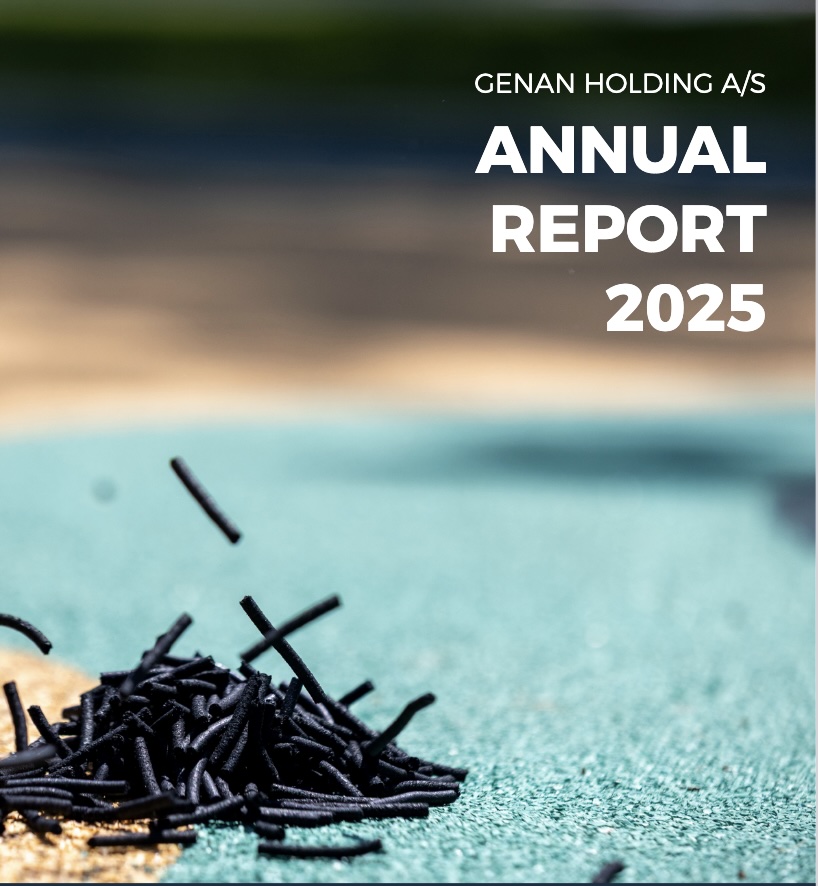
Another Solid Year For Genan
2025 Annual Report emphasizes that the circular business model is robust
In a market impacted by fluctuating exchange rates and raw material prices, the Genan group has strengthened profit and produced a record -high 2025 operating result, confirming that the circular business model is not only sustainable – but also financially robust long -term.

International environmental company Genan reached a 2025 group revenue of EUR 64m compared to EUR 63.7 the year before. Operating profit (EBIT) increased from EUR 7.9m to EUR 8.8m , and both revenue and operating profit are thus the highest ever. Net profit did, however, drop from EUR 6.4m in 2024 to EUR 5.9m in 2025 – primarily due to negative exchange rate adjustments.
“Overall, we are quite satisfied with the 2025 accounts, which demonstrate that our circular business model is robust and financially viable,” Group CEO in Genan Holding A/S, Poul Steen Rasmussen, said.
 The annual report shows that focus has shifted from build-up and scale-up to a more mature phase where profitability and optimization of existing markets and production entities have been top priority.
Genan is now entering a new phase where market presence takes priority with a more goal-oriented outlook for which markets, products, segments and applications to focus on and deciding where the biggest potential is.
At the same time, Genan continues to assess the possibilities of structural adaptation in order to further strengthen the business and optimize its overall footprint through possible acquisitions, partnerships or adjustments of activities.
Short -term, Genan expects growth this year to EUR 67 m, while profit will continue to be impacted by the development in the global commodity markets.
Increased political interest in markets and applications for recycled materials are needed, Rasmussen said.
“Not only Genan should step up the pace. The entire recycling industry should,” he said.
While the tire recycling industry has become good at collection and sorting of waste, Rasmussen points out that frameworks for and incentives to apply these materials are crucial for a circular economy.
Genan runs six factories – with an annual production capacity of more than 400,000 tons of end-of-life tires (ELT) in total. Primary factory output consists of up to 295,000 tons of rubber products, 60,000 tons of steel and 45,000 tons of textile fibers.
While rubber and steel have gained substantial markets the textile fraction is still a key challenge. Genan is investing considerable resources in developing new areas of application for tire-derived textiles.
To increase the use and applications for tire-derived materials, the report suggests political support calling for a certain percentage of recycled materials in public procurement.
All products already produced represent the success of today’s tire and rubber recycling industry and portend future growth. To create a more sustainable future, applications and markets for tire derived products and materials must be accelerated.
© Scrap Tire News, May 2026
SPONSORS