
Closing The Loop: Tire Retreading and the Circular Economy
By David Stevens
Managing Director, Tire Retread & Repair Information Bureau (TRIB)
Pursuing circular economy goals by keeping materials in productive use, eliminating waste, and recovering value at the end of service life has become the defining sustainability framework across manufacturing. The tire retreading industry has been executing this model for almost a century, operating at scale, with proven economics, a documented environmental record, and well-established infrastructure. What has changed is the external environment: Scope 3 emissions reporting requirements and sustainability-linked fleet procurement standards are starting to pressure both fleets and tire manufacturers to account for material efficiency across the full product lifecycle.

That shift makes it worth examining where retreading sits in the tire industry’s circular economy hierarchy. Our case is straightforward: retreading belongs at the top, and a casing that can be retreaded should be retreaded before it moves downstream in the lifecycle. That is what the waste hierarchy demands, what the data supports, and what our industry should be saying clearly and consistently.
Where the Value Lives in a Tire
The environmental argument for retreading starts with a straightforward observation about how tires are constructed and how they wear. The casing represents roughly 75 percent of a commercial truck tire’s total mass and a still higher proportion of its embodied energy and carbon footprint. The tread compound that contacts the road and gradually wears down is the minority fraction. When that tread reaches its wear limit, the casing beneath it is typically still structurally sound, with substantial service life remaining. Retreading replaces the minority fraction while preserving the majority, and that asymmetry is the source of its efficiency advantage over simply purchasing new tires.
 The numbers bear this out directly. Manufacturing a new commercial tire requires approximately 22 gallons of oil equivalent across raw material sourcing and processing, plus the energy-intensive cure cycle. A retread requires roughly 7 gallons. The 15-gallon differential per retread event represents resources that stay out of the petrochemical supply chain entirely. A quality casing that completes two retread cycles has tripled the productive output of its original manufacturing investment; three cycles quadruples it. Evaluated on cost-per-mile and carbon-per-mile across full casing life rather than first life only, the comparison to repeatedly purchasing new tires is not competitive.
First in the Hierarchy, Not Last
The scrap tire sector has made genuine progress developing end-of-life pathways. Tire-derived fuel now displaces fossil fuels in cement kilns and industrial boilers, crumb rubber is used in civil engineering and molded goods, and pyrolysis technology is producing recovered carbon black and fuel oils with growing commercial traction. These are legitimate circular contributions, and the infrastructure supporting them has matured considerably over the past two decades.
But all of these are downstream recovery pathways. They extract value from a tire after it has been fully consumed in service. Retreading operates upstream, keeping the casing in its highest-value functional state for additional service cycles. The waste hierarchy underlying circular economy policy is explicit on this point: reuse and remanufacturing rank above recycling, and recycling ranks above energy recovery. Retreading is the only pathway in the tire industry’s end-of-life landscape that qualifies as genuine remanufacturing.
With the United States generating approximately 325 million scrap tires annually, every commercial retread produced defers one casing from that stream for one or more additional service lives. The scale of that impact is significant and often undercounted in industry sustainability reporting. A long-haul fleet that retreads its casings an average of two times before disposal is generating roughly one-third of the scrap tire volume it would produce on a new-tire-only program, while simultaneously reducing per-mile tire costs and carbon intensity. The highest-leverage opportunity in tire circularity is not improving what happens to tires at end of life. It is extending productive life before tires ever reach that stage.
Quality Is the Non-Negotiable Foundation
Every environmental and economic claim the retread industry makes rests on a single prerequisite: casing integrity and process discipline. The continued influx of low-quality, heavily subsidized imported truck tires designed for single-service life is not only damaging the retread industry by degrading the casing pool and undercutting retread pricing but is also compounding downstream waste and recycling burdens. A retread built on a compromised casing is not a circular economy contribution. It is a waste of tread compound, cushion gum, and labor, and a source of in-service failures that erode confidence in the entire retread category. This point deserves emphasis because the industry’s credibility depends on it.
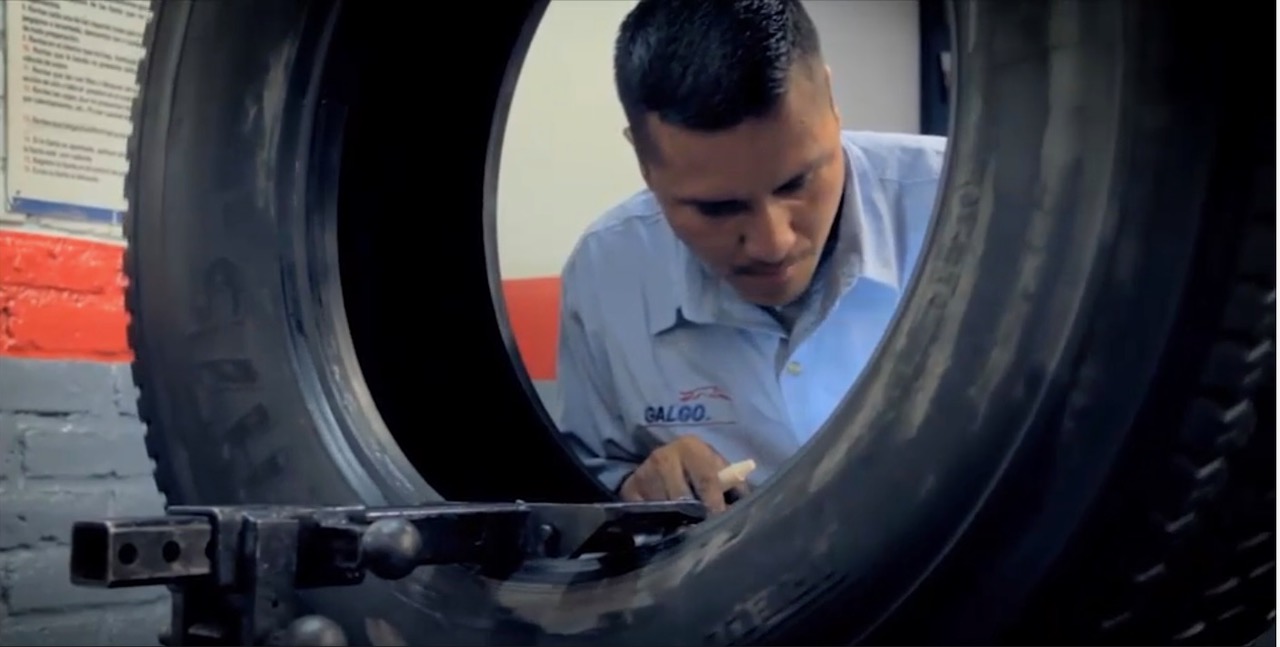
Best-practice retread operations combine shearography or X-ray NDT inspection with thorough manual examination to identify belt-edge separations, inner liner damage, ply distortions, and impact breaks that are not externally visible. Buffing tolerances, cushion gum selection matched to the application and casing condition, and cure process, whether precure or mold-cure, all directly affect the adhesion quality and service life of the finished retread. Casing selection and inspection discipline, applied before a single pound of tread compound is committed, is where retread programs truly succeed.
Addressing the Safety Question Directly
No examination of retreading’s role in the circular economy is complete without addressing the safety perception problem directly, because that incorrect perception remains a barrier to retread adoption among fleet operators who have not yet committed to a retread program.
The highway tread debris commonly attributed to retreads in public perception is overwhelmingly the product of underinflation-induced failure from overheating, a type of failure that affects new tires just as readily as retreads, as documented by multiple state and federal studies. Tread separations are a tire maintenance failure, not a retread manufacturing defect.
The clearest safety evidence available comes from the applications where product liability and operational risk tolerance leave no room for compromise. The common usage of retreaded tires on commercial aircraft, emergency vehicles, school buses, and military vehicles refutes any perceived safety concerns. These are not sectors where safety is a secondary consideration.
The Economics of Casing Investment
The financial structure of commercial retreading aligns fleet operator incentives directly with casing preservation, which is precisely the alignment circular economy policy is designed to produce. A quality commercial retread is normally priced 30 to 50 percent below a comparable new tire, and that cost differential creates a strong standalone value proposition. However, the more powerful proposition is total casing lifecycle cost.
Fleets that evaluate tire economics on a cost-per-mile basis across full casing life, with casing tracking systems, disciplined inflation monitoring, and consistent removal-reason documentation, consistently outperform fleets buying simply on per-unit purchase price. The disciplines that produce the lowest cost-per-mile are the same disciplines that produce the lowest failure rates and the longest casing lives. This alignment of financial and environmental benefits is what makes retreading a durable business model rather than a concession to sustainability.
The Path Forward
Long-term investments in chemically recyclable elastomers, specification-grade pyrolysis carbon black, and scalable devulcanization technology are worth pursuing, and the retread industry supports that research. Progress on these fronts will strengthen the tire industry’s overall circular economy performance for decades to come.
Tire retreading is unique because it’s not a transitional technology holding the line until something better arrives. It is the most effective circular economy tool the tire industry currently has, and it has been that tool for nearly a century. The retread industry does not need new infrastructure, regulatory approval, or further proof of concept. It needs fleet operators, procurement managers, and sustainability professionals to recognize what the data has long confirmed: that keeping a sound casing in service is always preferable to replacing it, that the environmental and financial case for retreading are one and the same, and that every retread produced is a direct, measurable contribution to a more sustainable tire industry. The waste hierarchy is clear. The economics are compelling. The only question is how quickly the industry acts on both.
© Scrap Tire News, March 2026
SPONSORS