California OEHHA Study Upholds Safety of Crumb Rubber in Synthetic Turf
“It’s a big day for tire recycling.”
That was the sentiment heard all across the tire and rubber recycling industry last month when news hit the streets that California had completed the most comprehensive human risk assessment ever conducted on recycled rubber concluding that recycled tires used as crumb rubber in synthetic turf are not likely to harm users or spectators.

“There is no evidence of significant risk for cancer or other health problems from this recycled rubber to players, coaches, referees and spectators based on the available data, even for young athletes,” the newly released study from California’s Environmental Protection Agency (CalRecycle) and Office of Environmental Health Hazard Assessment (OEHHA) concluded.
“This study should ease concerns about the safety of crumb rubber use in synthetic turf fields,” said OEHHA Director Kris Thayer, ‘Athletes of all ages can use these fields without parents worrying about this commonly used material.'”
“This is an incredibly powerful statement from a globally respected health agency that reaffirms the safety of recycled rubber,” Thomas Womble, CEO of Liberty Tire Recycling, said.
 The OEHHA study reaffirms previous conclusions from a wide body of research. An extensive joint study by the U.S. Environmental Protection Agency, Consumer Product Safety Commission, and Centers for Disease Control and Prevention came to a similar conclusion in their 2024 report, saying health risk from crumb rubber infill is likely limited for athletes playing on turf versus natural grass.
“This is great news and reinforces what the industry has demonstrated for years,” Dick Gust, CEO of the Tire Industry Association, said. “We hope this comprehensive California study helps put lingering concerns to rest and allows more communities to benefit from this safe, sustainable use of recycled tires.”
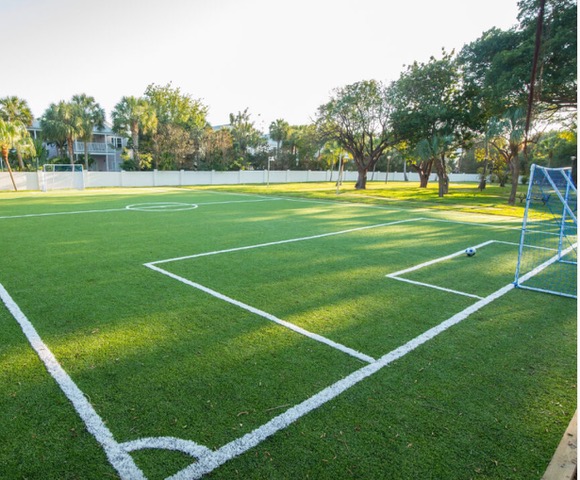
Synthetic turf fields are engineered to resemble natural grass but require less maintenance, use less water, and provide consistent playability without rest periods. These properties have led to widespread use on athletic fields across California and the U.S.
Many fields use crumb rubber, small granules produced by grinding up recycled waste tires, as infill material placed between the synthetic grass blades. This infill helps keep the blades upright, provides cushioning, and improves traction during play.
To evaluate safety, OEHHA tested 35 synthetic turf fields. The sampling accounted for both old and new fields, as well as fields from every climate region in California.
Multiple samples from each field were collected to account for variations in source materials. Cal OEHHA also collected air samples both during active use of the field and when no use occurred.
OEHHA’s groundbreaking study focused on more than 100 chemicals that could pose a risk, unlike past studies that only looked at a small number of chemicals.
To identify the full suite of chemicals present, OEHHA coordinated with the Lawrence Berkeley National Lab to simulate sweat and digestion and identify chemicals to which the public could be exposed.
To understand how people might be exposed to chemicals found, OEHHA worked with researchers from UC Berkeley and the University of Arizona. They studied how soccer players might contact crumb rubber through multiple exposure pathways including skin, breathing, or swallowing small pieces.
The team surveyed more than 1,000 soccer players, ages 7 to 71, about how they play, like sliding or diving on the field. They also recorded players during games and practices to see how often they touched the turf.
Because goalies dive the most, the study used goalie data to estimate risk for players. Researchers also looked at chemical risk to toddlers who might crawl on the field.
Researchers concluded there was no acute health risk to athletes, referees, coaches, spectators, or young children.
An early crumb rubber developer, producer and user,Barry Takallou, CEO, Crumb Rubber Manufacturing welcomed the OEHHA findings calling this science-backed conclusion positive news for the turf industry. “With growth in higher-value tire recycling slowing in recent years, these findings can help restore confidence, expand end uses, and help to develop a robust tire recycling industry,” Takallou said.
The research was carried out as part of California’s broader efforts to manage waste tires within a circular economy framework, where recycled materials are reused in end products and applications.
Denise Kennedy, President, DK Enterprises called the OEHHA findings excellent news and especially timely for California given pauses or restrictions on state grants/funding programs for turf installation and playground surfacing installations and upgrades. Kennedy anticipates seeing how the results influence California policy, funding, and community projects moving forward.
For the nascent Washington, DC-based Tire Recycling Foundation (TRF) the findings of the recent OEHHA study are an important step toward expanding circular, more sustainable end-of-life tire markets. This in-depth analysis which found no significant health risks from crumb rubber used in synthetic turf provides communities with greater confidence in recycled rubber as a material option.”
While the study focused on health risk, TIA notes that crumb rubber applications in synthetic turf support responsible waste tire management and contribute to a circular economy by keeping end-of-life tires out of landfills.
Ecore, a pioneer in the production and use of crumb rubber in a wide range of applications, concurs.
“For decades, recycled rubber has helped deliver durable, high-performance surfaces while also diverting millions of end-of-life tires from landfills. Independent studies like this reinforce the important role recycled materials play in building safe, sustainable spaces for communities,” Ecore President and COO Jeff Cote said.
With support for the development of sustainable, responsible end-use markets for recycled tires, the Tire Industry Association along with the Tire Recycling Foundation, crumb rubber manufacturers, end users and other industry stakeholders encourage policymakers, communities, and athletic organizations to review the findings and the growing body of research supporting the safe use of crumb rubber.
© Scrap Tire News, April 2026
SPONSORS